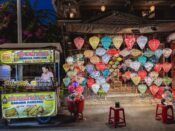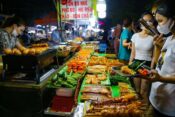
If you’re wondering what to eat in Hoi An, here’s the short answer: everything. This little lantern-lit town on Vietnam’s central coast might just be the country’s greatest food city per square meter. Four centuries as a trading port — Chinese, Japanese, French, and Cham merchants all passing through — left Hoi An with dishes you literally cannot find anywhere else on Earth.
The longer answer is this guide. Below are the seven non-negotiable dishes, what makes each Hoi An version special, where locals actually eat them, what to say when you order, and roughly what you’ll pay. By the end, you’ll eat like someone who’s been coming here for years — not like someone who just got off the bus.
1. Cao Lau — The Noodle You Can Only Truly Eat in Hoi An
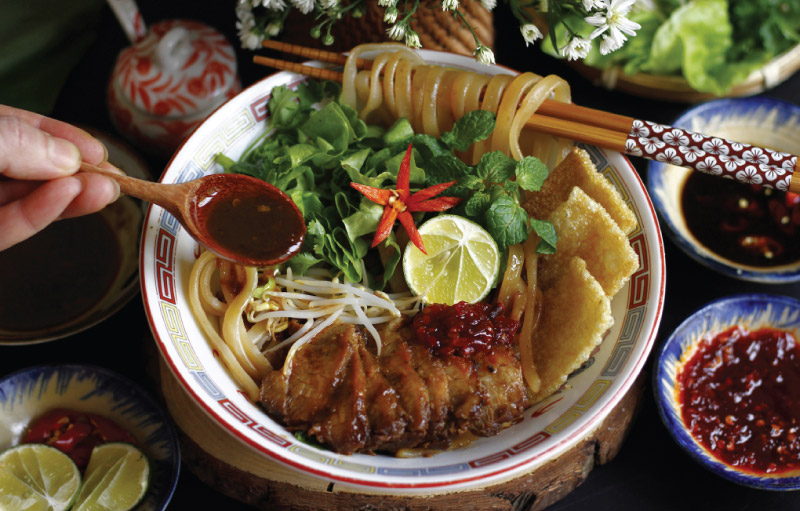
Start with the legend. Cao lau is thick, chewy, golden-brown noodles tossed with slices of char siu-style pork, crunchy rice crackers, fresh herbs, and just a few spoons of rich broth — never a full soup. The texture lands closer to Japanese udon than Vietnamese pho, a delicious echo of the Japanese traders who once lived here.
What makes it unrepeatable: tradition insists true cao lau noodles must be made with water from the ancient Ba Le well in Hoi An. Whether you believe the legend or not, nobody outside town has ever quite nailed it.
Ordering tip: Just say “cao lau” (pronounced cow-lao) — there’s really only one way to serve it. Expect to pay around 40,000–55,000 VND (under $2.50) at the no-frills family stalls in the Old Town, where the best versions hide behind six plastic stools and no English menu.
2. White Rose (Banh Bao Banh Vac) — Dumplings Like Edible Flowers
White rose dumplings are Hoi An’s most poetic dish: delicate, translucent parcels of shrimp and pork, pinched into the shape of tiny roses and topped with crispy shallots. For decades, a single family supplied the entire town — and the recipe is still fiercely guarded.
Ordering tip: Ask for “banh bao banh vac” (bahn-bow bahn-vahk) or simply “white rose.” Head to the original family-run White Rose restaurant in the Old Town, where they’re steamed to order all day. A plate runs about 50,000–70,000 VND. Eat them with the sweet-salty dipping sauce provided, one whole dumpling per bite.
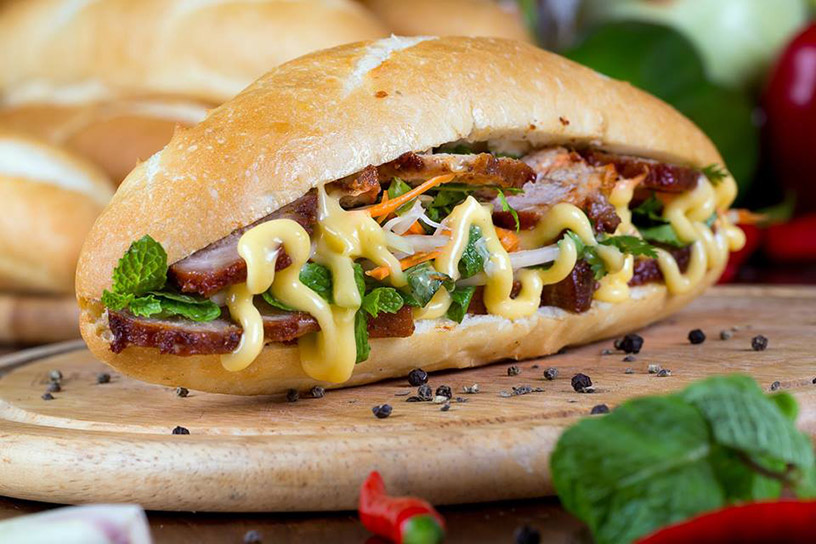
3. Banh Mi Hoi An — The World’s Most Famous Sandwich
Yes, you can get banh mi all over Vietnam. No, it’s not the same. Hoi An’s baguettes are baked fresh throughout the day — shatteringly crisp outside, warm and airy inside — then loaded with pate, grilled pork, pickles, coriander, and a secret sauce. Anthony Bourdain famously called one local version a “symphony in a sandwich,” and the town has been deservedly proud ever since.
Ordering tip: Order “thap cam” (tup-cum, meaning “mixed”) to get a bit of everything. The legendary Banh Mi Phuong draws lines down the block — go before 10 a.m. or after the lunch rush. Expect 20,000–35,000 VND, making it possibly the best dollar you’ll spend in Vietnam.
4. Mi Quang — Central Vietnam in a Bowl
Mi quang is the soul food of Quang Nam province: wide turmeric-yellow noodles in a small amount of intensely flavored broth, topped with prawns, pork, a halved quail egg, crushed peanuts, and a shard of sesame rice cracker. It’s the dish locals from Da Nang to Hoi An crave when they’re homesick.
Ordering tip: Don’t wait for more soup — it’s meant to be barely brothy. Mix everything together, crumble the rice cracker over the top for crunch, and add chili if you’re brave. A bowl at a local spot costs around 30,000–45,000 VND.
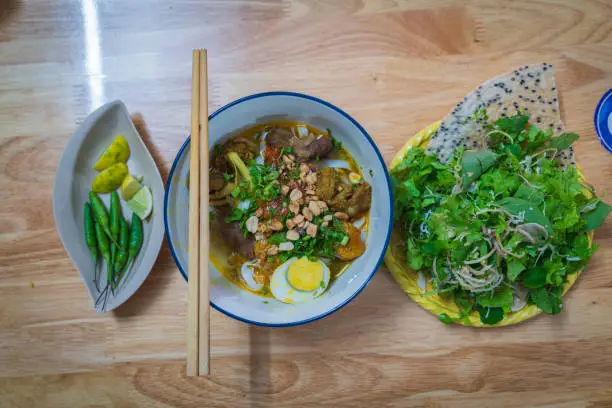
Mi Quang — Quang-style turmeric noodles
5. Banh Xeo — The Sizzling Pancake You Roll Yourself
Named for the loud xeo sizzle it makes hitting a hot pan, banh xeo is a giant crispy turmeric crepe stuffed with pork, shrimp, and bean sprouts. The fun is in the assembly: tear off a piece, wrap it in rice paper with a fistful of herbs and lettuce, and dunk it in peanut-hoisin sauce.
Ordering tip: Watch the locals first — the wrap-and-dip technique takes one try to learn. It’s a two-handed, gloriously messy operation, so don’t wear white. Expect 40,000–60,000 VND per pancake, easily shared between two as part of a bigger spread.
6. Com Ga Hoi An — Chicken Rice, Done Right
Hoi An’s chicken rice sounds almost too simple: shredded poached chicken tossed with onion and Vietnamese coriander, served over fragrant turmeric rice cooked in chicken broth, with a small bowl of soup on the side. But the balance — the turmeric-stained grains, the zingy herbs, the chili-lime fish sauce — is perfection.
Ordering tip: The town’s most famous com ga shop has been run by the same family for generations; ask your hotel or any local for “com ga Ba Buoi” and you’ll be pointed the right way. Around 35,000–50,000 VND. Squeeze lime over everything.
7. Che and Herbal Drinks — The Sweet Finish
End like a local: with something sweet. Che is Vietnam’s beloved dessert soup — colorful layers of beans, jelly, coconut cream, and crushed ice in a tall glass. Or try the town’s famous herbal iced tea: lotus, lemongrass, and lime served from a tiny Old Town shophouse, the unofficial fuel of lantern-lit evenings.
Ordering tip: For che, point at whatever looks most colorful — you can’t go wrong. The herbal tea (“tra thao moc”) costs next to nothing, around 10,000–15,000 VND; a glass of che runs 15,000–25,000 VND. It’s the pause that lets the evening settle.
Eating Vegetarian in Hoi An: Easier Than You Think
Good news for plant-based travelers: Hoi An is one of Vietnam’s easiest towns for vegetarians. A deep Buddhist tradition means “com chay” (vegetarian eateries) are everywhere, especially around the full moon. Most dishes on this list have vegetarian versions — cao lau chay, banh mi chay, vegetarian white rose — made without losing their soul. Just say “chay” (chai) when ordering, and on a guided tour, mention it when you book so tastings can be adapted in advance.
Hoi An Street Food Etiquette: 6 Tips Before You Go
Embrace the plastic stool. The humbler the seating, the better the food — this is a universal law in Hoi An.
Carry small cash. Most stalls are cash-only, and small denominations (10k, 20k, 50k notes) make everyone’s life easier.
Follow the crowd. A busy stall with high turnover means fresh ingredients. An empty one at dinner time tells its own story.
Learn three words. Mot (one), hai (two), and ngon (delicious). Point, smile, say ngon — you’ll make friends instantly.
Time it right. Mornings belong to the wet market and noodle soups; evenings belong to lantern-lit grills and the riverside. Both are essential.
Pace yourself. With seven dishes calling your name, treat lunch as a tasting menu, not a single-dish affair.
Frequently Asked Questions
What food is Hoi An famous for?
Cao lau, white rose dumplings, and banh mi are the holy trinity — dishes tied to Hoi An by history and found properly nowhere else. Mi quang, banh xeo, com ga, and che complete the must-eat list.
How much does street food cost in Hoi An?
Very little. Most signature dishes cost 20,000–60,000 VND ($1–$2.50). You can eat like royalty for a full day on under $10–$15, drinks included.
Is Hoi An street food safe to eat?
Generally yes. Eat where locals eat, choose stalls with high turnover and food cooked fresh to order, and drink bottled or filtered water. If you have a sensitive stomach, ease in with cooked dishes like cao lau and com ga first.
Can vegetarians eat well in Hoi An?
Absolutely — it’s one of Vietnam’s most vegetarian-friendly towns thanks to its Buddhist roots. Look for “com chay” signs, and most iconic dishes have excellent meat-free versions.
What is the easiest way to try all of these dishes?
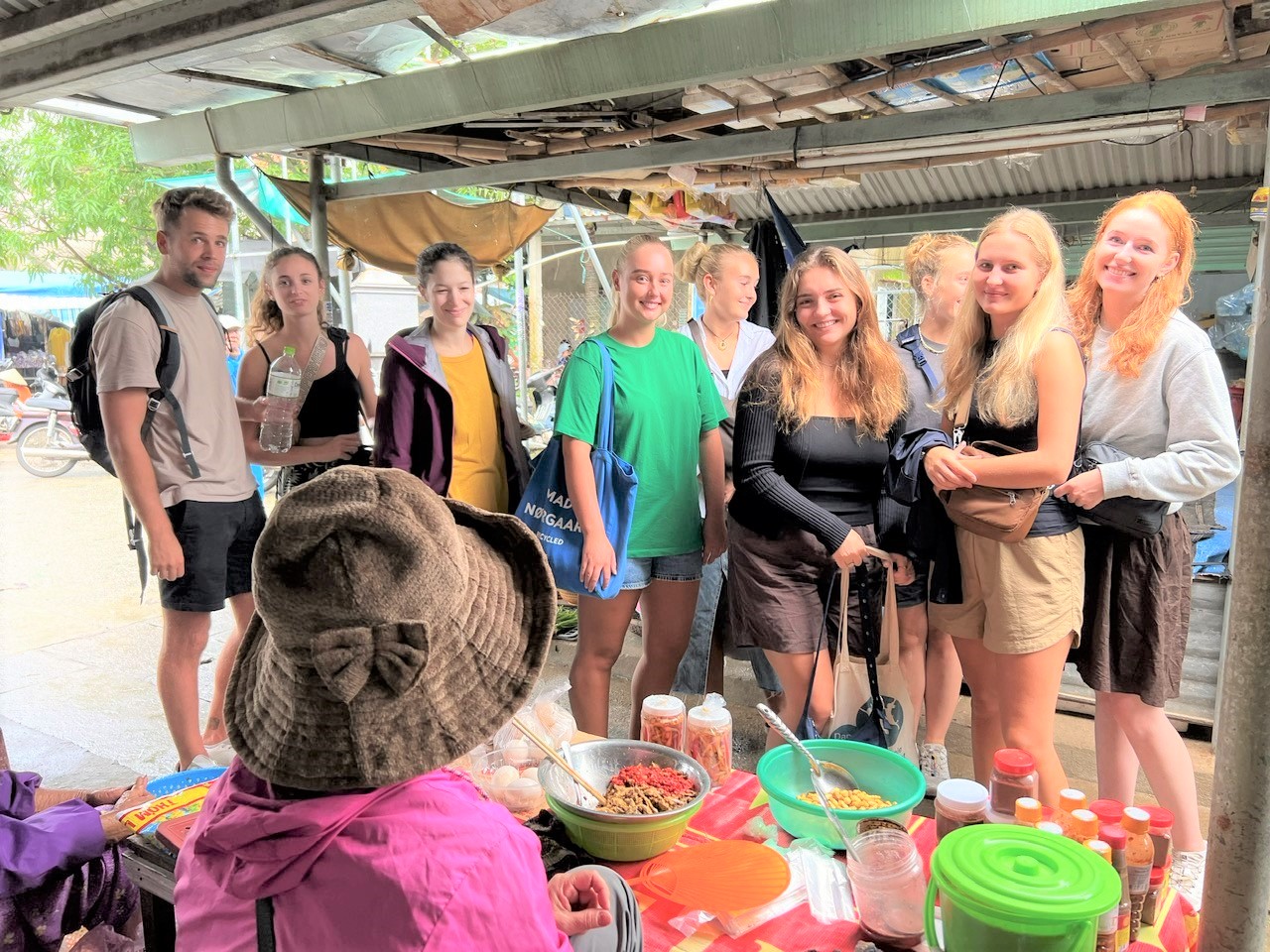
Honestly? Don’t DIY it. The best stalls hide down alleys with no English menus, and the stories behind the food are half the flavor. A guided food tour takes you straight to the right vendors in the right order — more on that below.
Done Reading About What to Eat in Hoi An — Now Come Taste It
You now know what to eat in Hoi An. The harder part is where: the six-stool cao lau shop with no sign, the white rose kitchen that’s been perfecting one recipe for decades, the banh mi cart the locals queue at while tourists walk past. That’s the part no blog post — including this one — can fully give you.
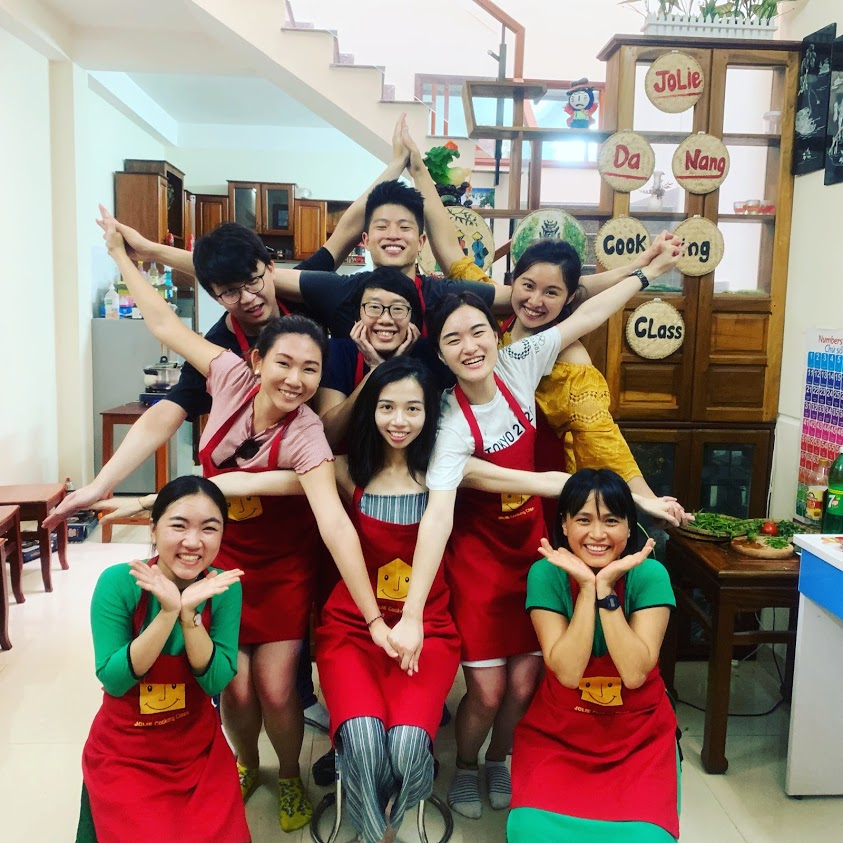
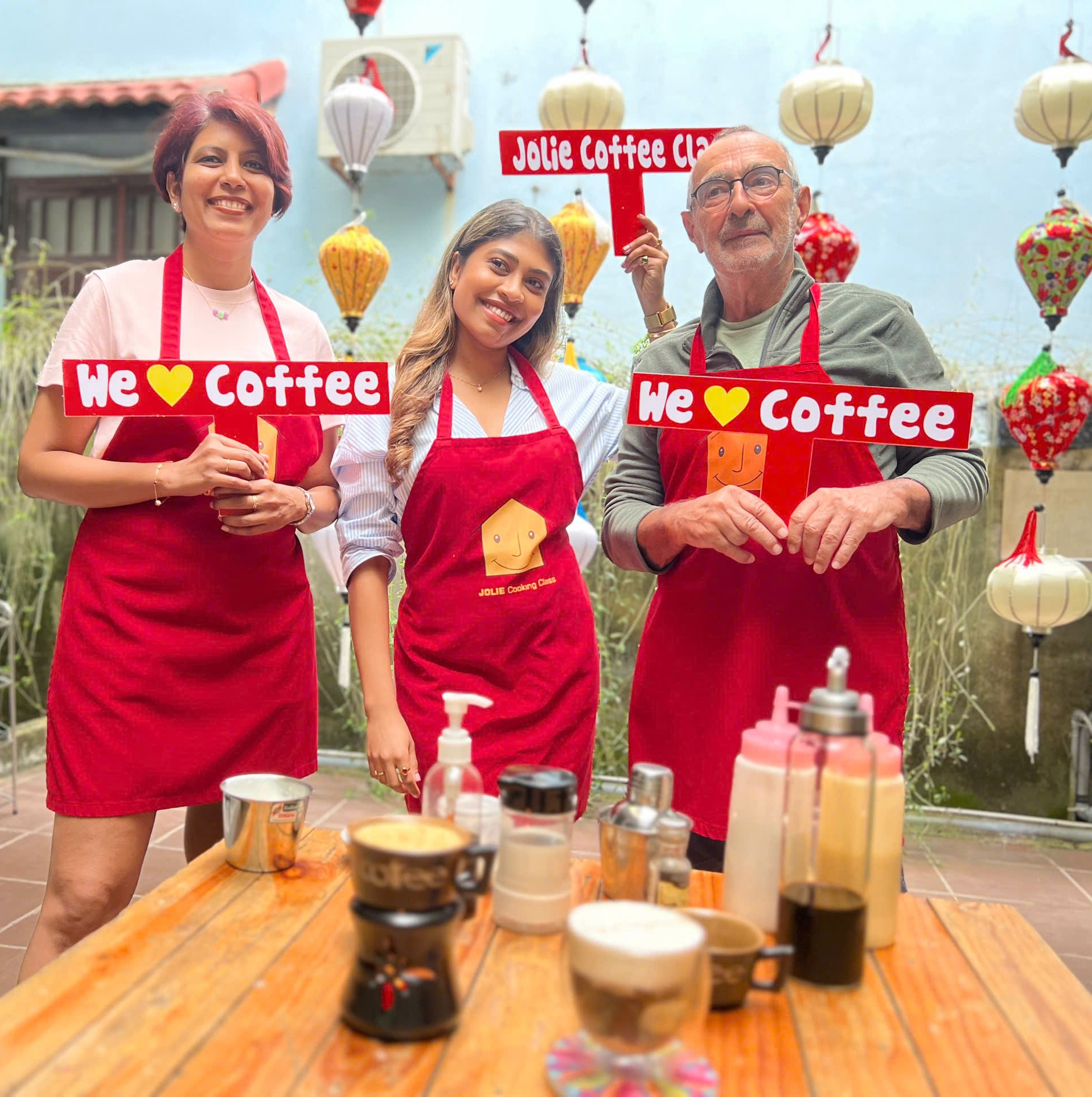
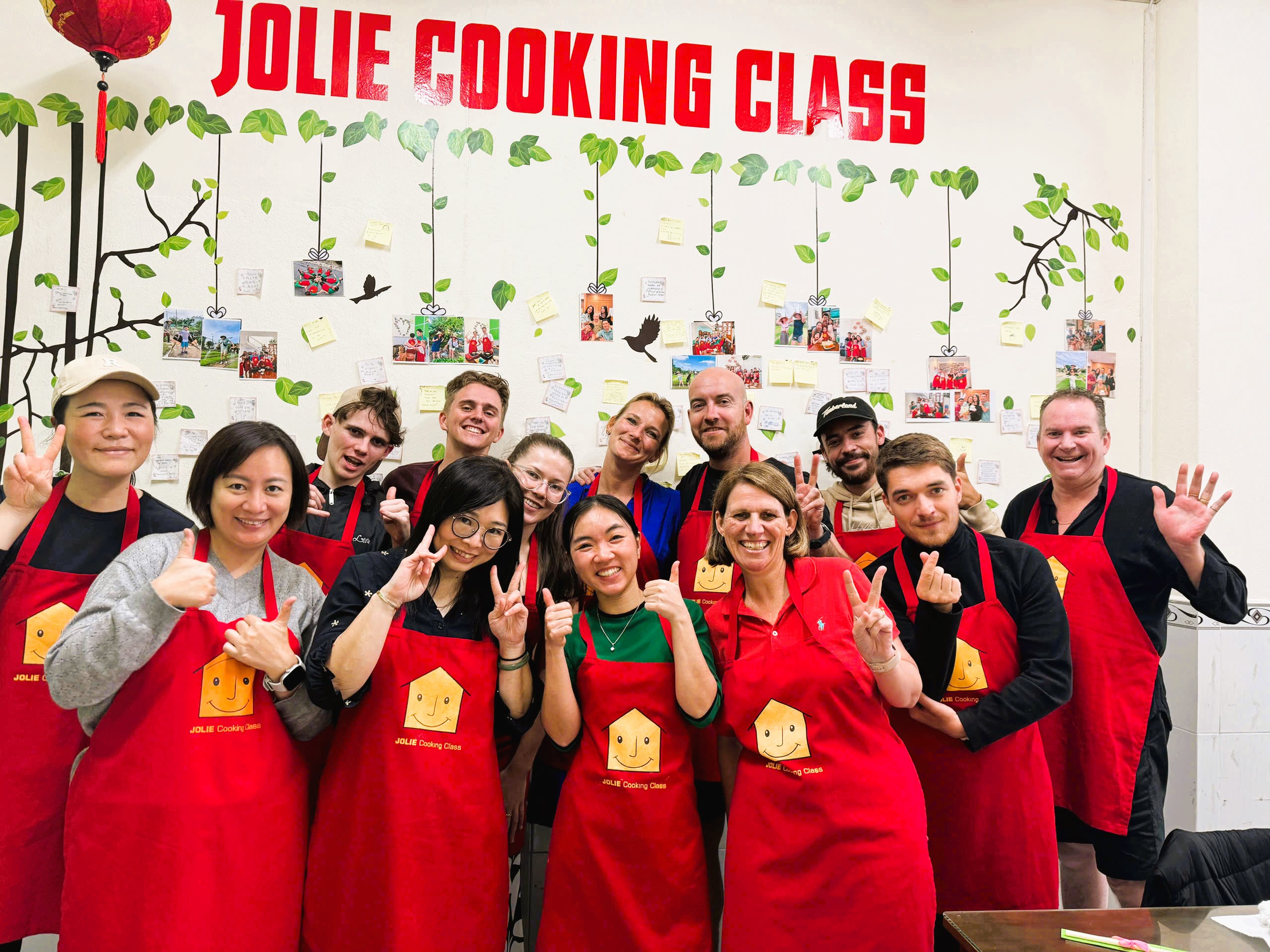
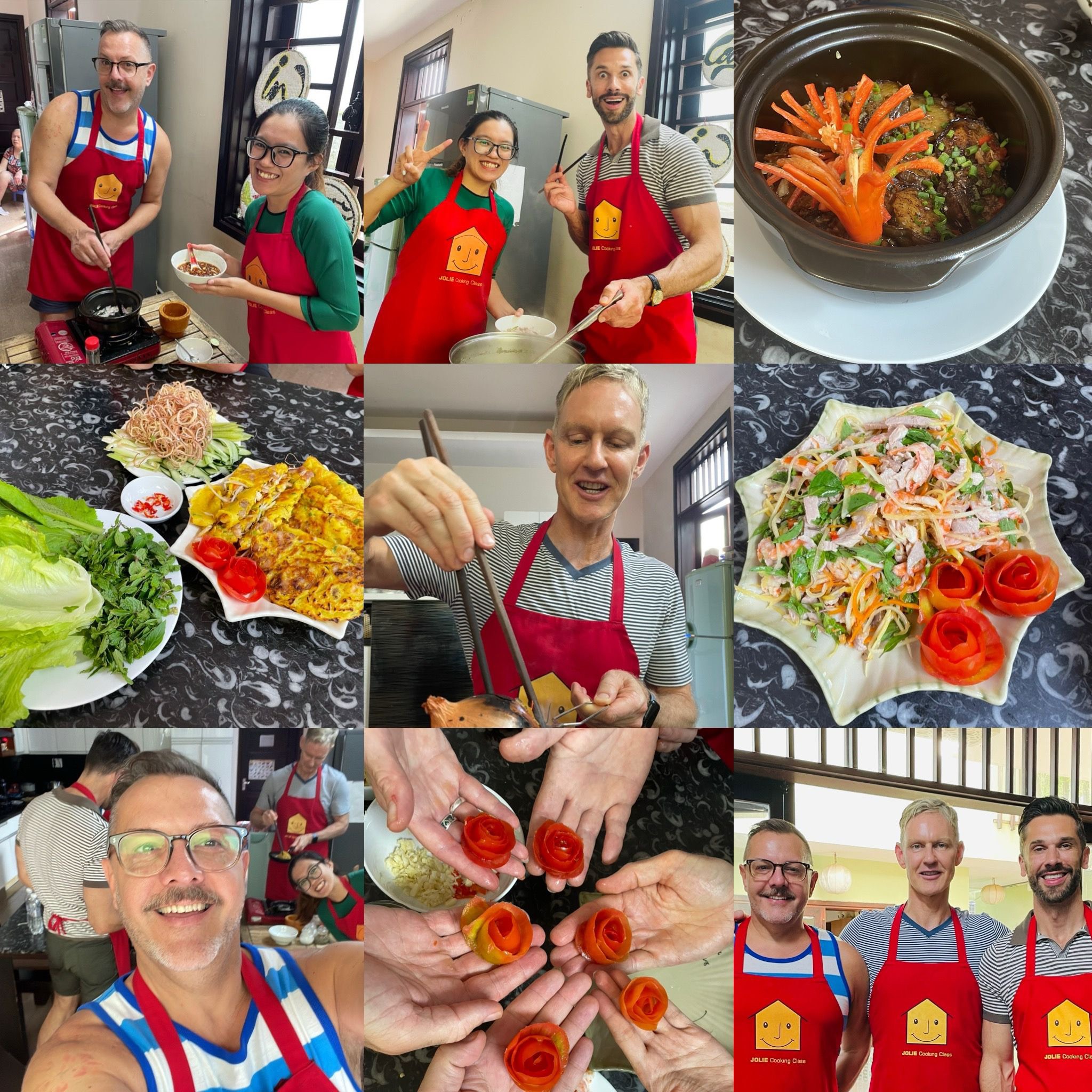
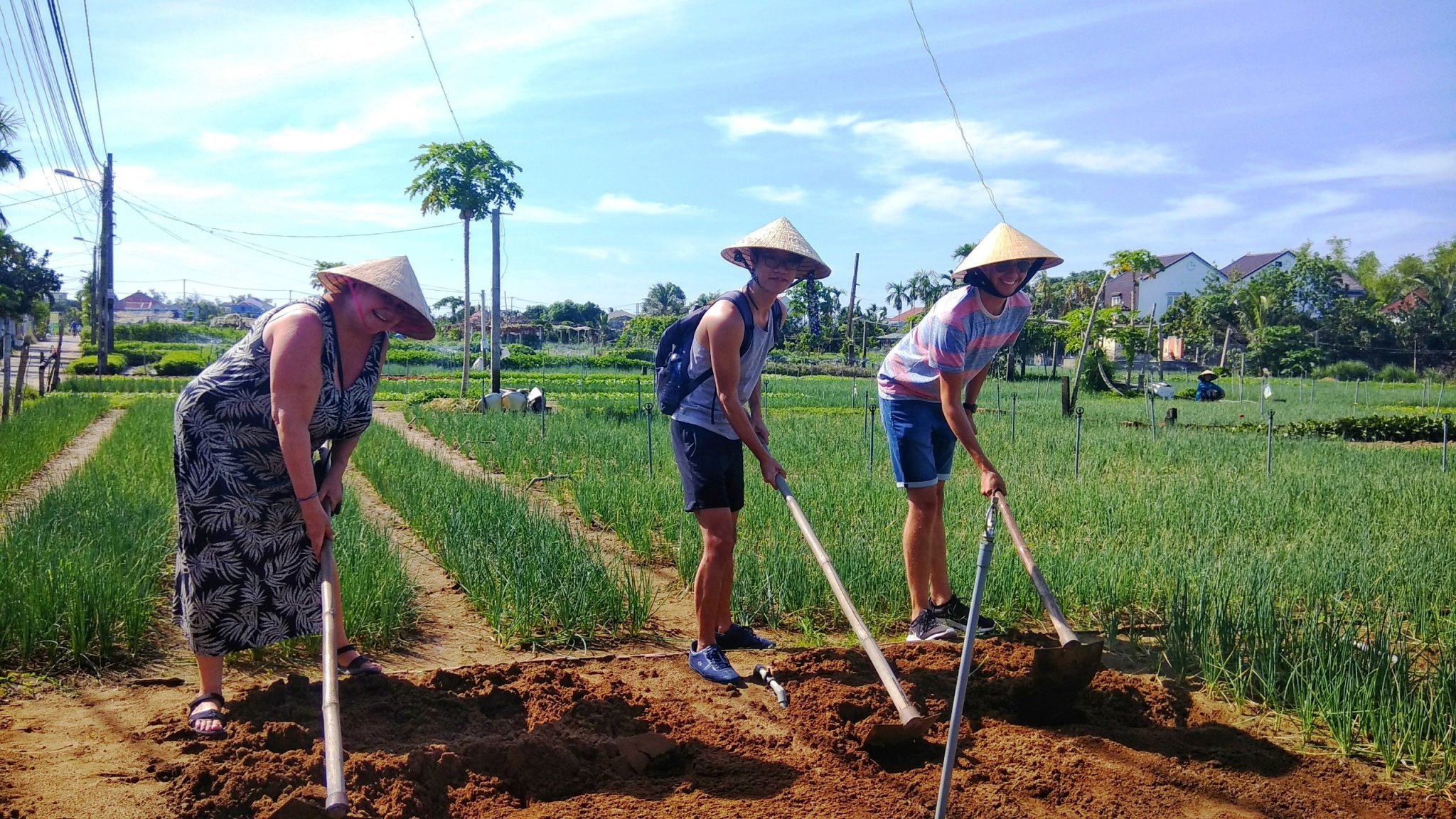
The easiest way to taste them all in one go is a guided Hoi An Food Tour with Jolie Cooking Class: a family-run team welcoming travelers in Da Nang and Hoi An for 10+ years, with 3,500+ happy travellers, 1,650+ tours, and 99.5% positive reviews. Small groups, market walks, family recipes, and a local host who knows every vendor by name.
Book your Hoi An Food Tour:
- Explore tours: joliecookingclass.com
- Email: joliecooking@gmail.com
- Da Nang: 14 An Trung Dong 6 · Hoi An: 14 Luu Trong Lu
- Phone/WhatsApp: +84 399 67 68 52
Come hungry. Leave family.