Da Nang Cooking Class: Learn to Cook Central Vietnamese Food with a Local Chef
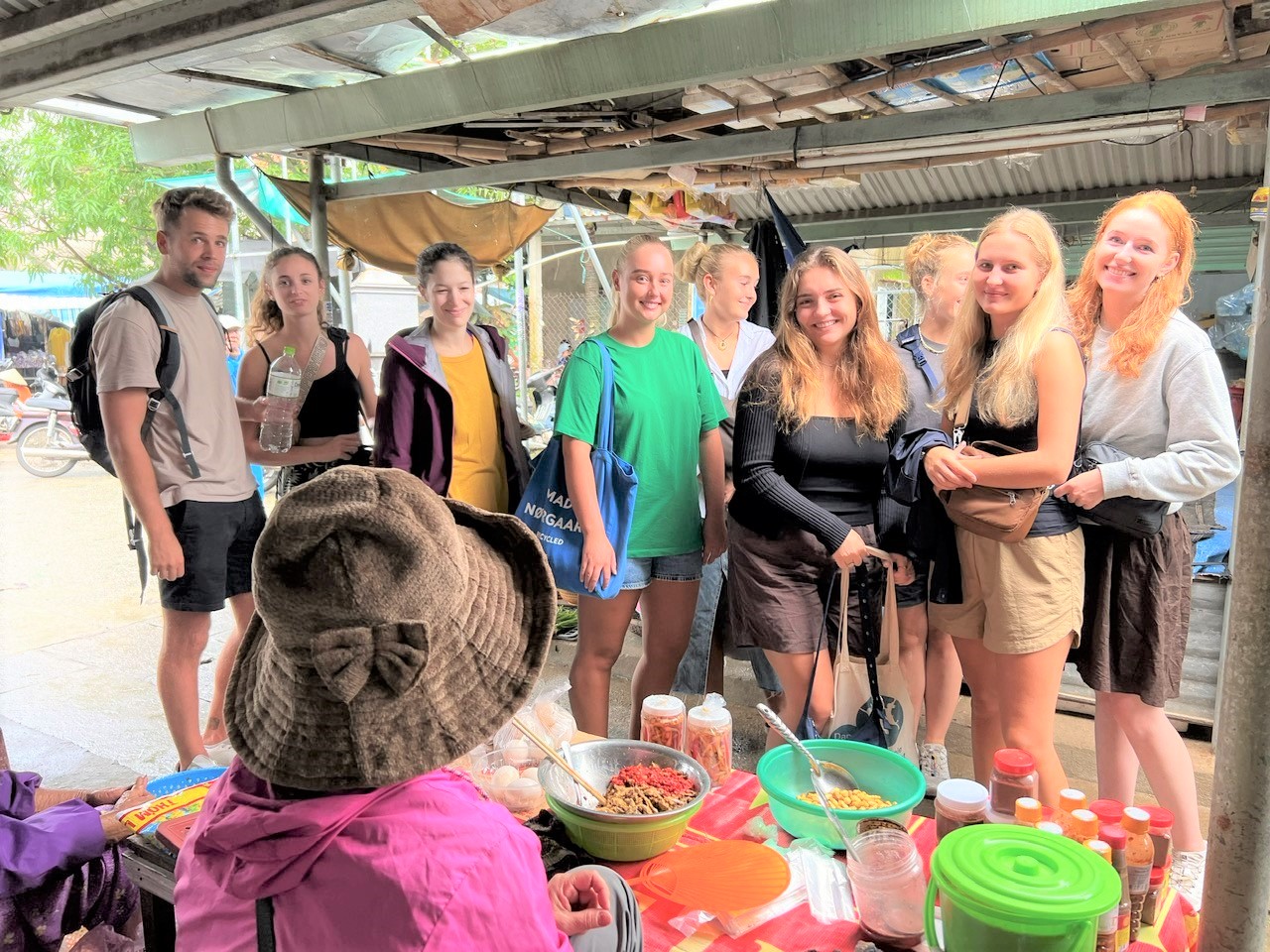
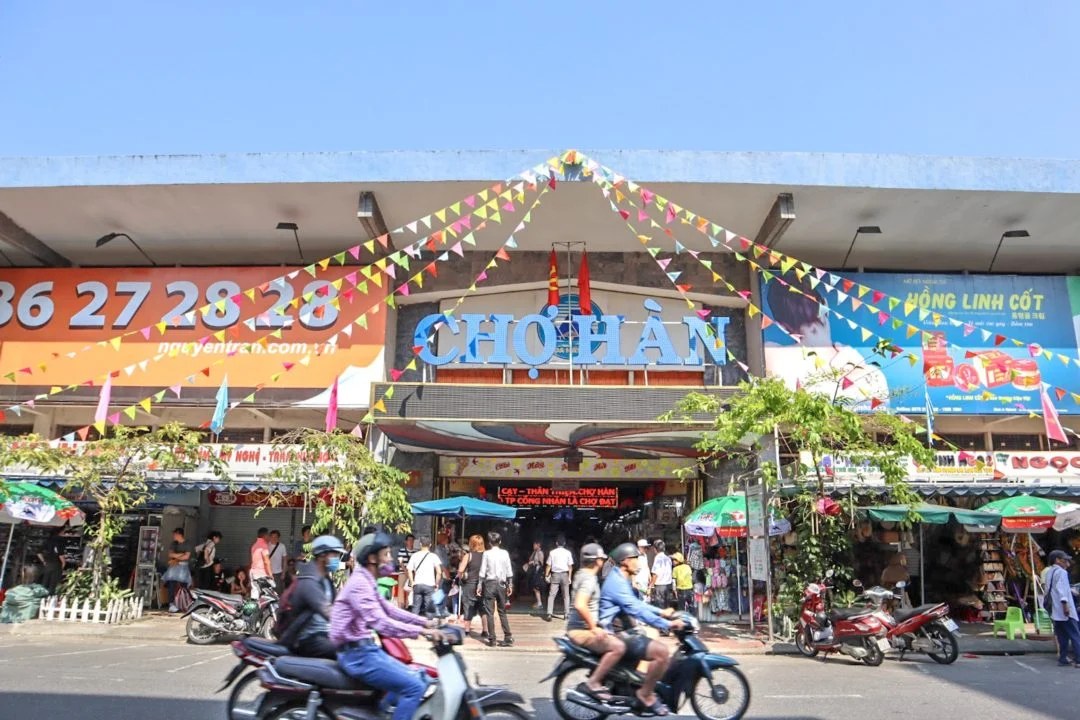
Eight in the morning at Han Market, and Da Nang is already cooking. Under the market’s high roof, turmeric glows in golden mounds beside pyramids of dried chilies. A vendor fans charcoal under a brazier, and the air smells of char, lime leaf, and something sweet you can’t quite name yet. In a shallow basin, river shrimp flick their tails. An old woman presses a bundle of morning glory into your hands and shows you — with gestures, not words — how to snap the stems so they stay crisp.
This is where a Da Nang cooking class begins: not in a classroom, but in the beautiful chaos of a central Vietnamese market, learning to shop the way local families do. By noon, you’ll be folding those same ingredients into dishes you’ve probably only ever ordered — Mi Quang, Banh Xeo, Goi Cuon — and sitting down to eat them with the people who taught you.
If you’re thinking about booking a cooking class in Da Nang, this guide covers everything: what you’ll cook, how the day flows, whether to choose Da Nang or Hoi An, and how to pick the right class for your trip.
What Makes a Da Nang Cooking Class Worth It
Vietnam doesn’t have one cuisine — it has three. The north is subtle and refined, the south is sweet and abundant, and the center is bold, fiery, and unapologetic. Da Nang sits at the delicious heart of central Vietnam, and a danang cooking class isn’t a generic “Vietnamese cooking” lesson. It’s a deep dive into Quang Nam province’s food culture, taught by people who grew up eating it.
That’s the first thing that sets this experience apart. In a city famous for its beaches, most visitors never get past restaurant menus. A cooking class pulls back the curtain: you’ll learn why Mi Quang is served with only a ladle of broth (it’s a noodle dish, not a soup — drowning it is the classic tourist mistake), how to judge a Banh Xeo by its sizzle, and which herbs belong on the plate and which never do.
The second is the market. Anyone can follow a recipe at home. Almost no one gets to walk Han Market with a local chef who knows every vendor by name, tastes a slice of green mango to check it’s the right sourness, and teaches you to pick shrimp by the snap of the tail. That hour in the market rewires how you see Vietnamese food for the rest of your trip.
Three Central Vietnamese Classics You’ll Master
Mi Quang — the soul of Quang Nam
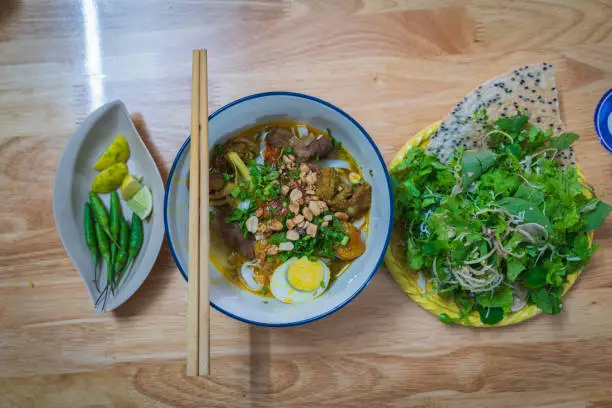
If Da Nang had to pick one dish to represent itself, it would be Mi Quang. Wide, turmeric-tinted rice noodles. A broth so rich that you only need a few spoonfuls — just enough to coat, never to flood. Shrimp, pork, and quail egg on top. Then the crunch: roasted peanuts and a shard of sesame rice cracker. Then a tangle of fresh herbs.
In class, you’ll learn the two things that make or break it: the noodle texture (chewy, never mushy) and broth discipline. Most first-timers want to add more liquid. Your instructor will stop you, smiling. Less is more — that’s the whole philosophy of the dish.
Banh Xeo — the sizzling crepe
Banh xeo literally means “sizzling cake,” named for the violent hiss when rice-flour batter hits a screaming-hot skillet. You’ll mix turmeric into the batter for that signature gold, swirl it thin, and listen. The sizzle tells you everything: too quiet and the pan’s too cold; too angry and the edges will burn before the center sets.
Then the filling — shrimp, pork, bean sprouts — a lid on top to steam it through, and the fold. Eating it is a skill of its own: tear off a piece, wrap it in mustard greens with mint and perilla, dunk it in nuoc cham, and get it to your mouth before it falls apart. Nobody manages it elegantly the first time. That’s half the fun.

Banh Xeo sizzling in the pan — listen for the hiss
Goi Cuon — fresh spring rolls
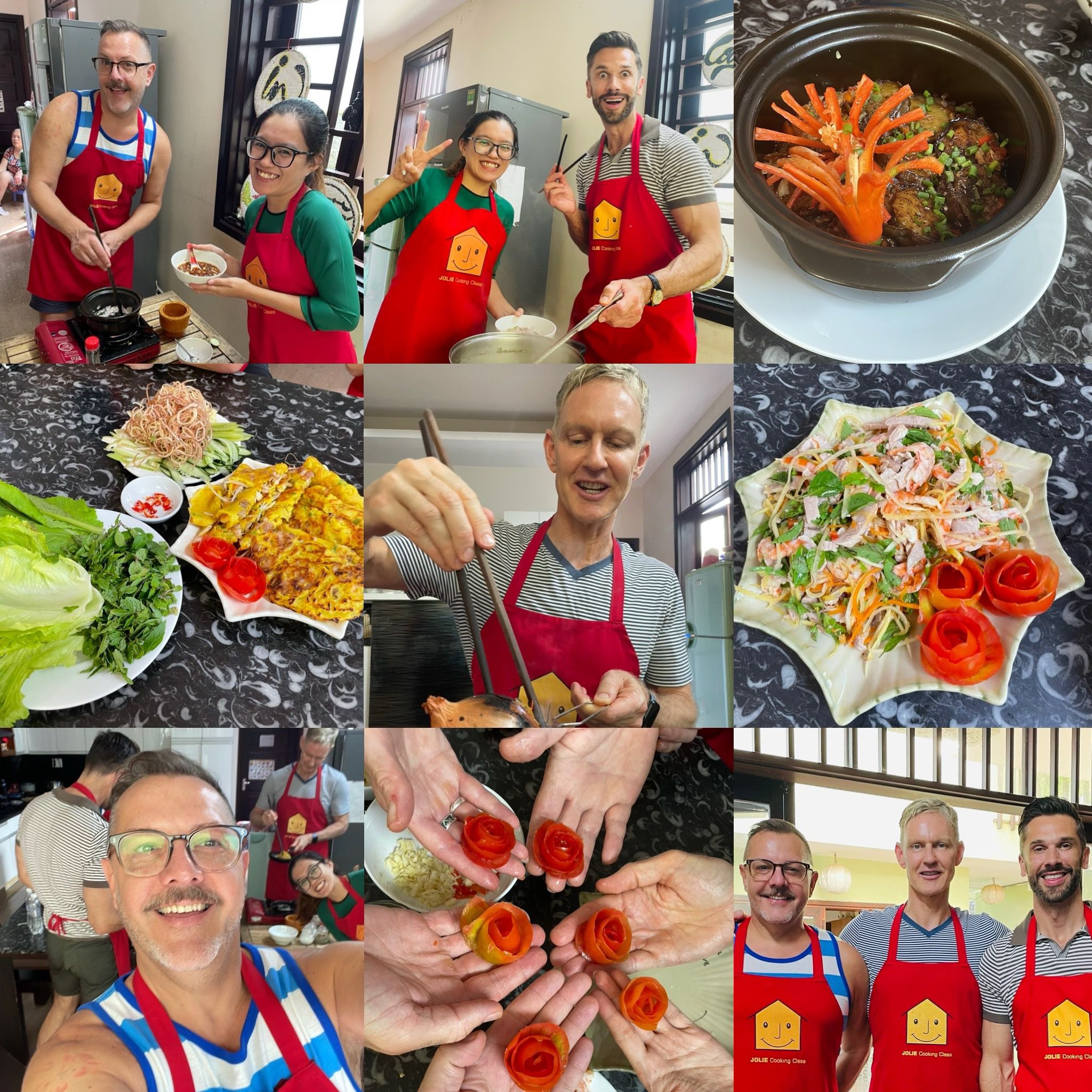
After the fire of the skillet, something cool and precise. Goi Cuon looks simple — rice paper, shrimp, pork, vermicelli, herbs — but rolling one that holds together takes technique. You’ll learn to soften the rice paper in warm water (two seconds too long and it tears), layer the filling in the right order, and roll tight with tucked ends. The reward is immediate: a translucent, jewel-like roll dipped in peanut-hoisin sauce, made by your own hands five minutes earlier.

From Han Market to Your Plate: How the Class Works
A typical da nang cooking class with market tour follows a rhythm perfected over years:
1. The market run. You meet your chef and small group in the morning and head into Han Market. This isn’t a walk-by — you’ll taste tropical fruit, learn to identify the dozen herbs that define central Vietnamese cooking, and help choose the morning’s proteins. Bring your curiosity; the vendors love an engaged audience.
2. Prep like a local. Back at the kitchen, it’s sleeves-up time. You’ll pound garlic and chilies, slice banana blossom paper-thin, and grind rice for batter. Vietnamese cooking is 70% preparation, and this is where the real lessons hide — knife skills, seasoning logic, and the patience to do things properly.
3. Cook station by station. Under your instructor’s eye, you’ll work through each dish: the sizzle of Banh Xeo, the assembly of Mi Quang, the delicate rolling of Goi Cuon. Small groups mean the chef is never more than an arm’s length away when your crepe needs rescuing.
4. Feast together. Then you sit down — instructors, fellow travelers, new friends — and eat everything you made. In Vietnam, a meal is never just food; it’s the conversation around it. This is the part travelers talk about for years.
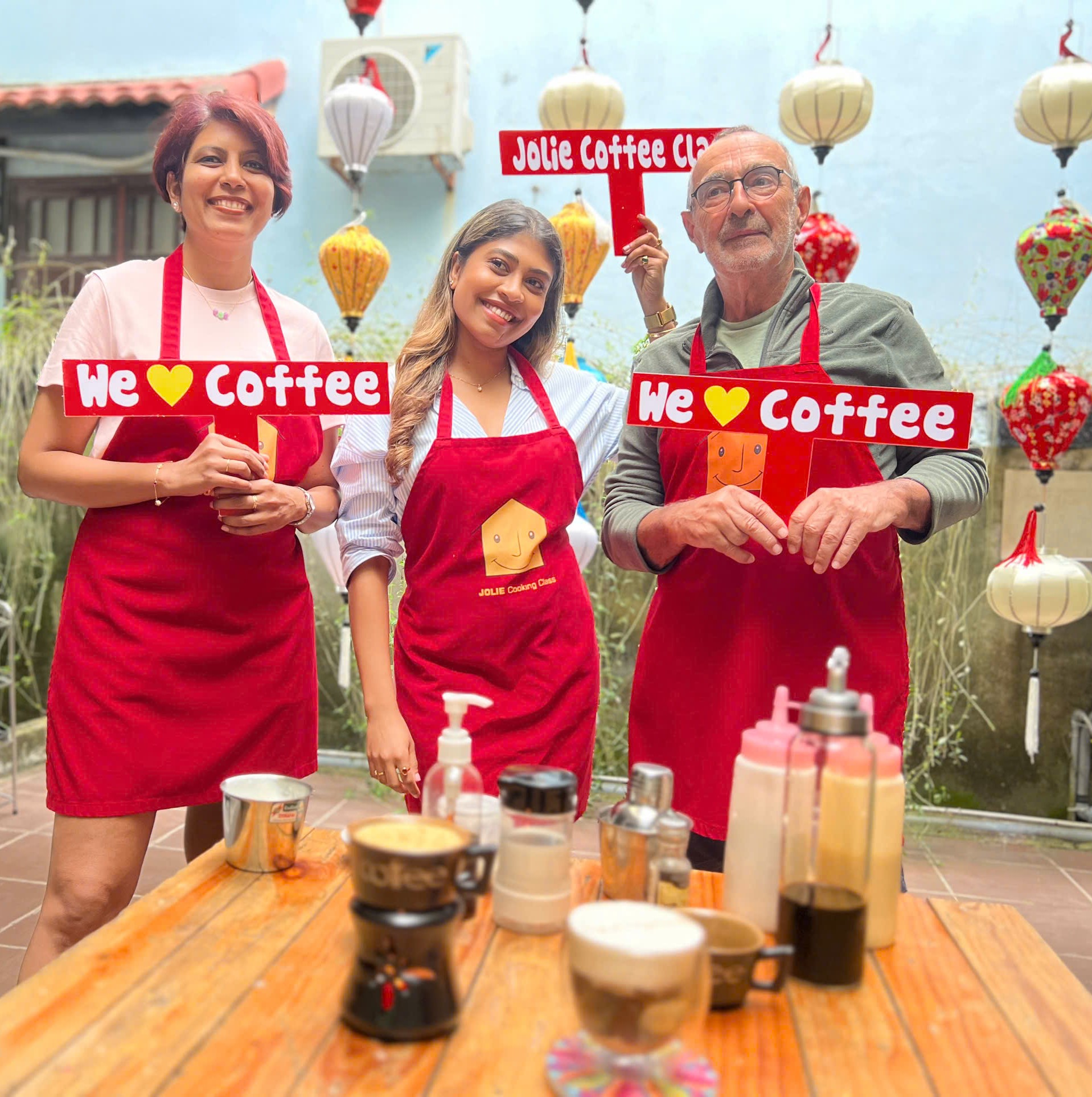
Ready to cook? Browse Jolie’s Da Nang classes — from coffee and banh mi workshops to hands-on market-to-table cooking experiences — and reserve your spot: Book your Da Nang cooking class
Da Nang or Hoi An: Which Cooking Class Should You Pick?
Jolie runs classes in both cities, and travelers ask this constantly. Here’s an honest breakdown:
Choose Da Nang if: you’re based in Da Nang and don’t want to travel; you want the Han Market experience specifically; you’re drawn to the city’s bolder, less tourist-polished food scene; or you want to pair cooking with a coffee or banh mi workshop.
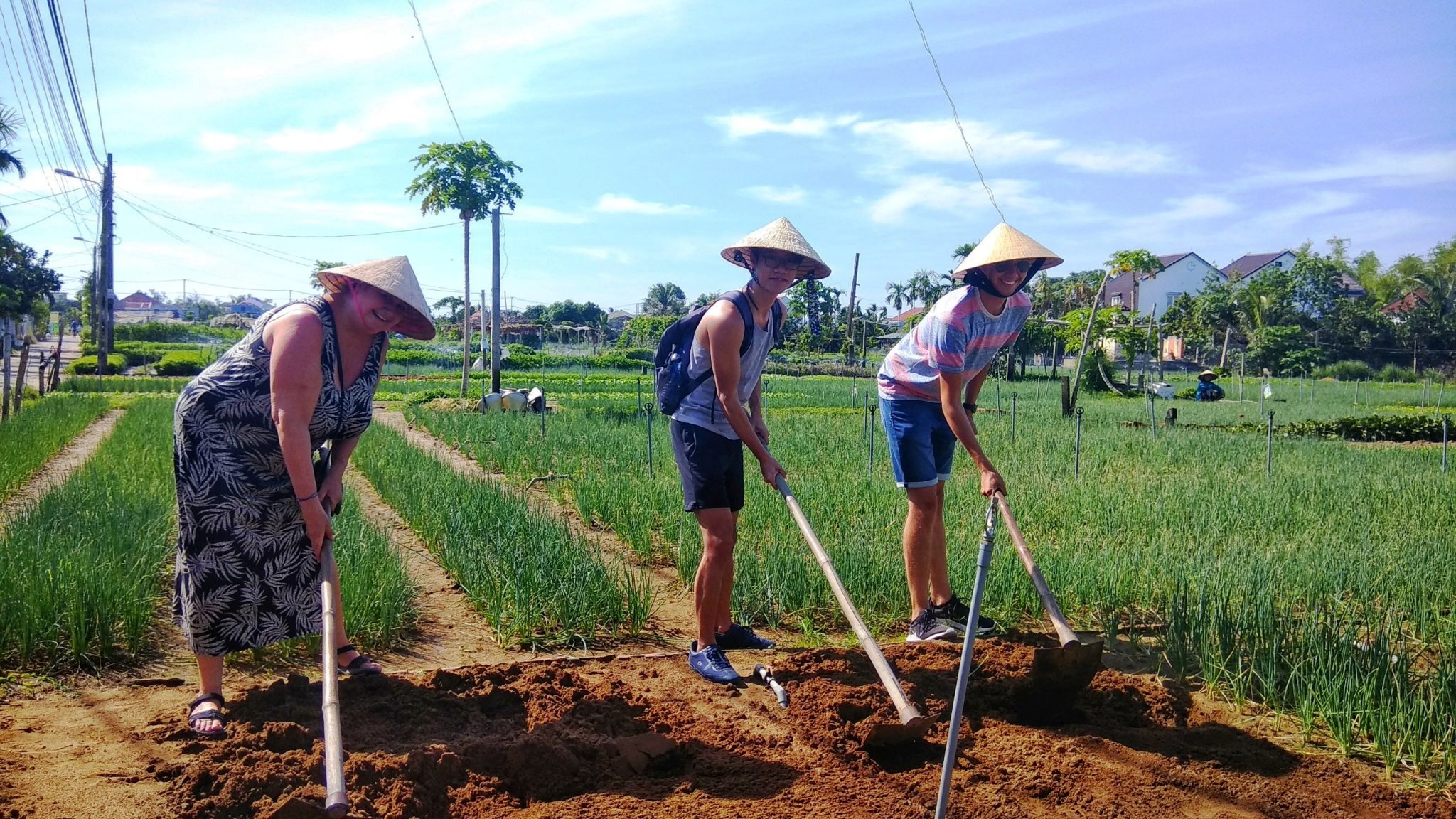
Choose Hoi An if: you’re staying in the old town; the basket-boat-and-cooking combo appeals to you; or you want the countryside-and-farming angle of the Hoi An experience.
The real answer? Many travelers do both — the cities are only about 40 minutes apart, and the cuisines, while related, have distinct personalities. If your itinerary includes Hoi An, read our guide to the Hoi An cooking class and compare.
Morning or Afternoon: When to Book Your Class
Morning classes start with the market at its liveliest — the full sensory rush described above, cooler air, and lunch is the feast you cooked yourself. If the market tour matters to you (it should), morning is the move.
Afternoon classes let you sleep in and sightsee first; the market is calmer but still excellent, and dinner is your handiwork. A great pick if you’re not a morning person or your Da Nang days are packed.
Either way, you’ll cook the same dishes and eat just as well. When in doubt, choose morning — the market at full tilt is unforgettable.
A Sample Half-Day Itinerary
Here’s how a typical morning flows:
- 8:00 — Meet at 14 An Trung Dong 6, Da Nang. Vietnamese coffee while the group gathers.
- 8:15–9:15 — Han Market tour: herbs, spices, proteins, tastings, and shopping for the class.
- 9:30–11:30 — Back at the kitchen: prep, then cook Mi Quang, Banh Xeo, and Goi Cuon step by step.
- 11:30–12:30 — Sit down together and feast. Recipes to take home, photos to prove it happened.
You’ll leave full, happy, and dangerous in the kitchen — in the best way.
Why Travelers Book Their Da Nang Cooking Class with Jolie
Jolie Cooking Class is family-run, based in both Da Nang and Hoi An, with more than 10 years of welcoming travelers. That’s not marketing language — it’s the reason the experience feels the way it does:
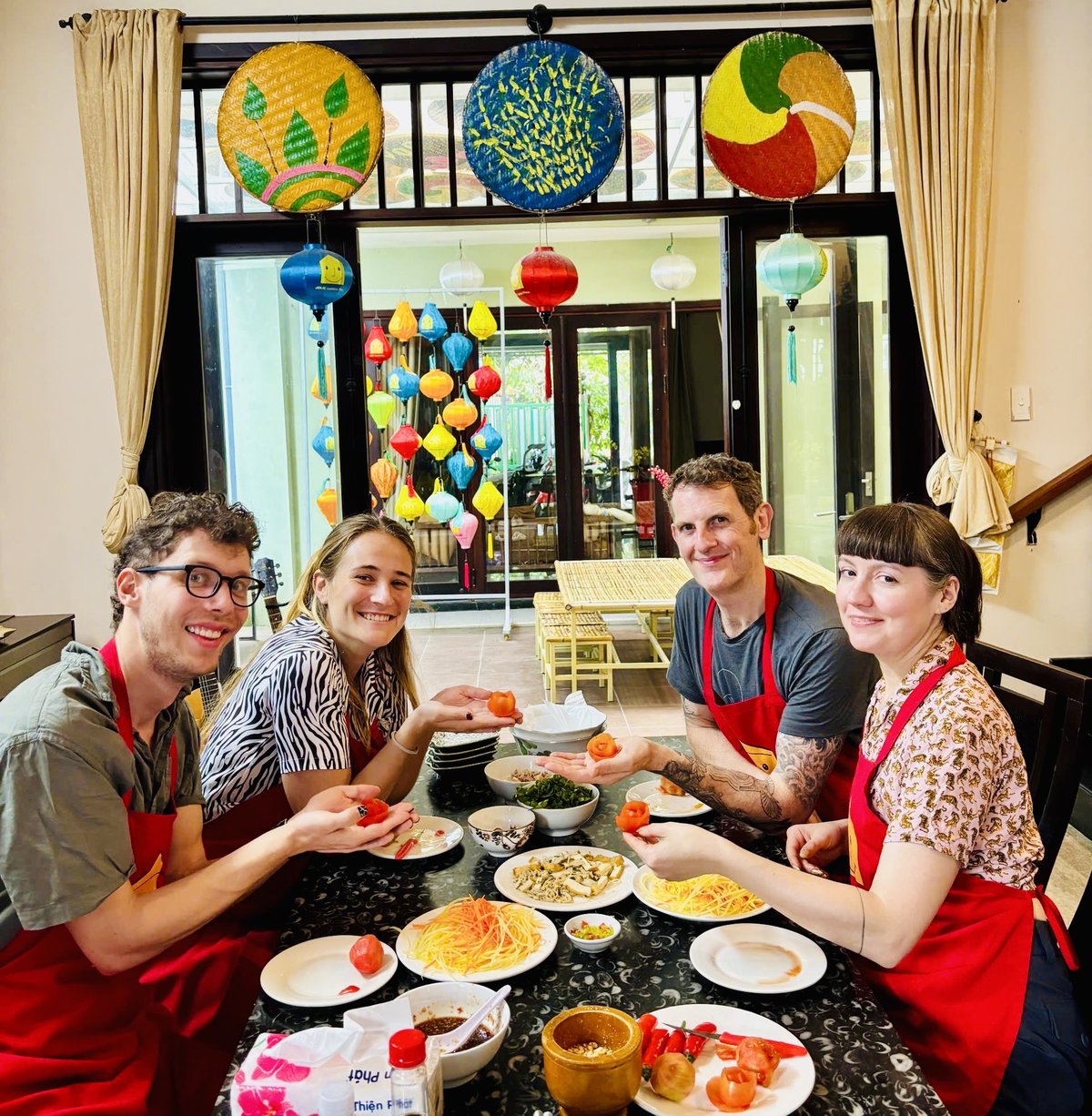
- Small groups, personal attention. You’re cooking alongside the instructor, not watching from the back row. It feels less like a class and more like visiting friends in Vietnam who happen to be excellent cooks.
- Real family recipes. No demo-kitchen shortcuts, no watered-down “tourist versions.” The Mi Quang you’ll make is the Mi Quang the family eats.
- Two home bases. With kitchens at 14 An Trung Dong 6, Da Nang and 14 Luu Trong Lu, Hoi An, it’s easy to build cooking into your trip wherever you’re staying — or do both cities.
- A decade of practice. Ten-plus years means every timing hiccup, dietary curveball, and burnt crepe has been solved long before you arrive.

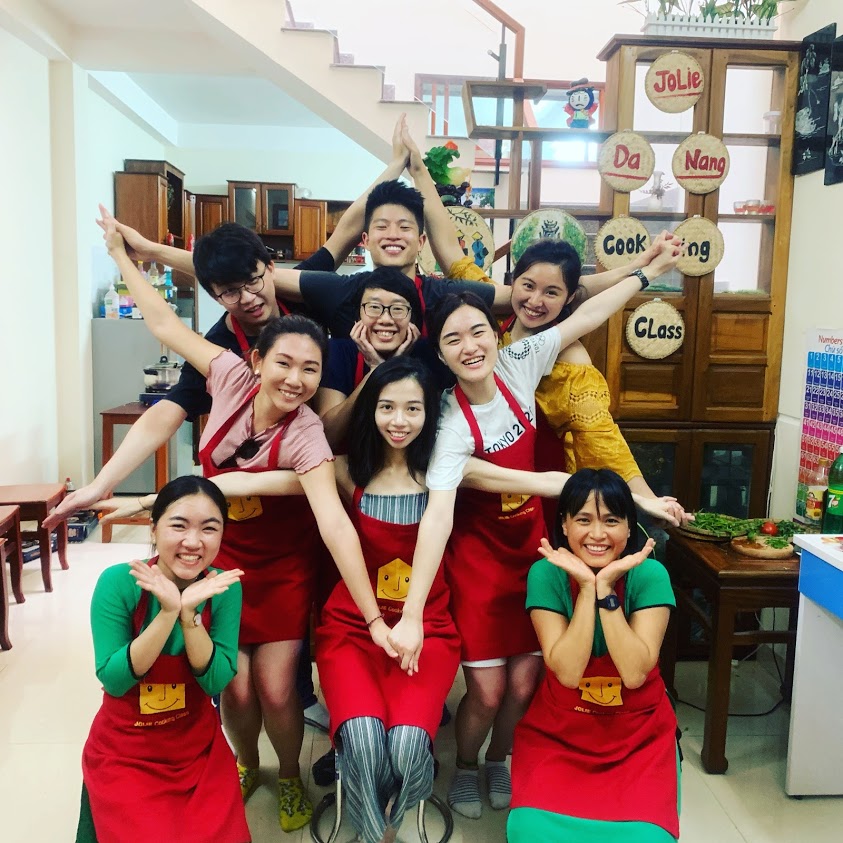
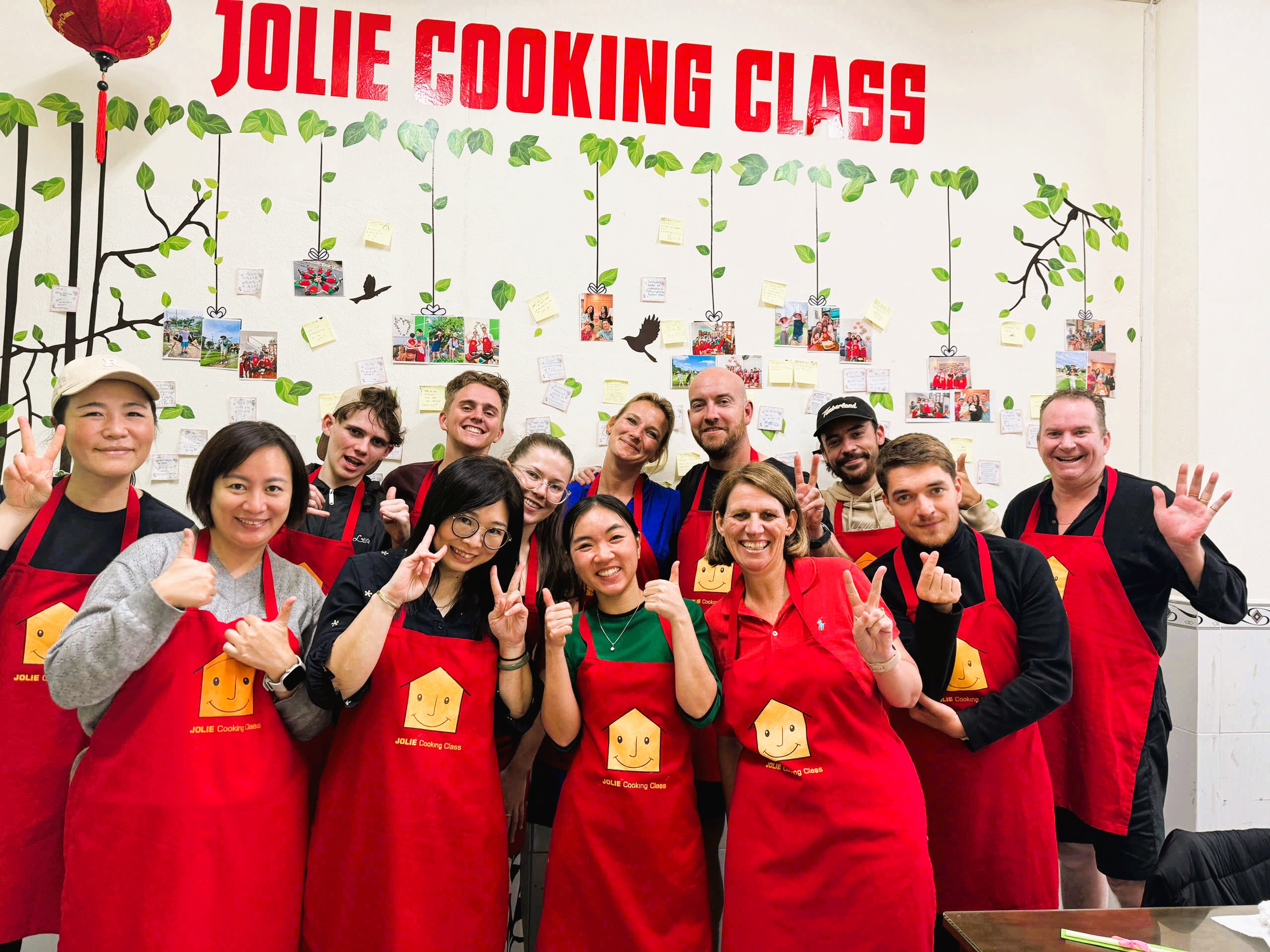
Cooking together at Jolie’s Da Nang kitchen
Taste the difference experience makes. Small groups fill fast — reserve your Da Nang cooking class today
Practical Tips for Class Day
- Wear comfortable shoes. Market floors are wet, and you’ll be on your feet. Skip the white sneakers.
- Bring a hat and sunscreen. Parts of the market walk are outdoors, and Da Nang sun is serious.
- Come hungry. This cannot be overstated. You’ll eat a full feast at the end — a big breakfast is a strategic error.
- Flag dietary needs when booking. Allergies, vegetarian, spice tolerance — tell Jolie in advance (a quick message to joliecooking@gmail.com or +84 399 67 68 52 works) so the menu can be adjusted.
- Bring your phone or camera. You’ll want photos of the market, the cooking, and the recipes you’ll take home.
Da Nang Cooking Class FAQ
How long does a Da Nang cooking class last? Plan for about half a day. The market visit, hands-on cooking, and shared meal typically fill a full morning or afternoon (roughly 3.5–4 hours door to door). Exact start times are listed on each class’s booking page.
How much does a cooking class in Da Nang cost? Prices vary by class type and season. Check the booking page for current prices — they typically cover the market tour, all ingredients, instruction, and the full meal you cook.
Is hotel pickup included? Pickup arrangements vary by class. Check the details on the booking page for your chosen class, or message Jolie when you reserve to confirm.
Can vegetarians join the cooking class? Yes. Jolie runs vegetarian-friendly options — including a dedicated vegan-vegetarian cooking class in Da Nang — and most menus can be adapted. Just mention your dietary needs when booking so the ingredients are ready.
How far in advance should I book? A few days ahead is usually fine, but book a week or more in advance during peak season (December–February) when small-group classes fill quickly.
Do I need cooking experience? None at all. Beginners are the norm, not the exception. Small groups and step-by-step guidance mean you’ll keep up easily — and the chef has rescued far worse crepes than yours.
The Takeaway
A Da Nang cooking class is the rare travel experience that keeps paying you back: long after the trip, you’ll still be making Banh Xeo in your own kitchen, hearing that sizzle, and thinking of a golden morning at Han Market. It’s hands-on, delicious, deeply local — and, travelers consistently say, the highlight of their time in central Vietnam.
Come hungry, leave as a cook. Book your Da Nang cooking class with Jolie today — your seat at the table is waiting.