
Shuttle bus
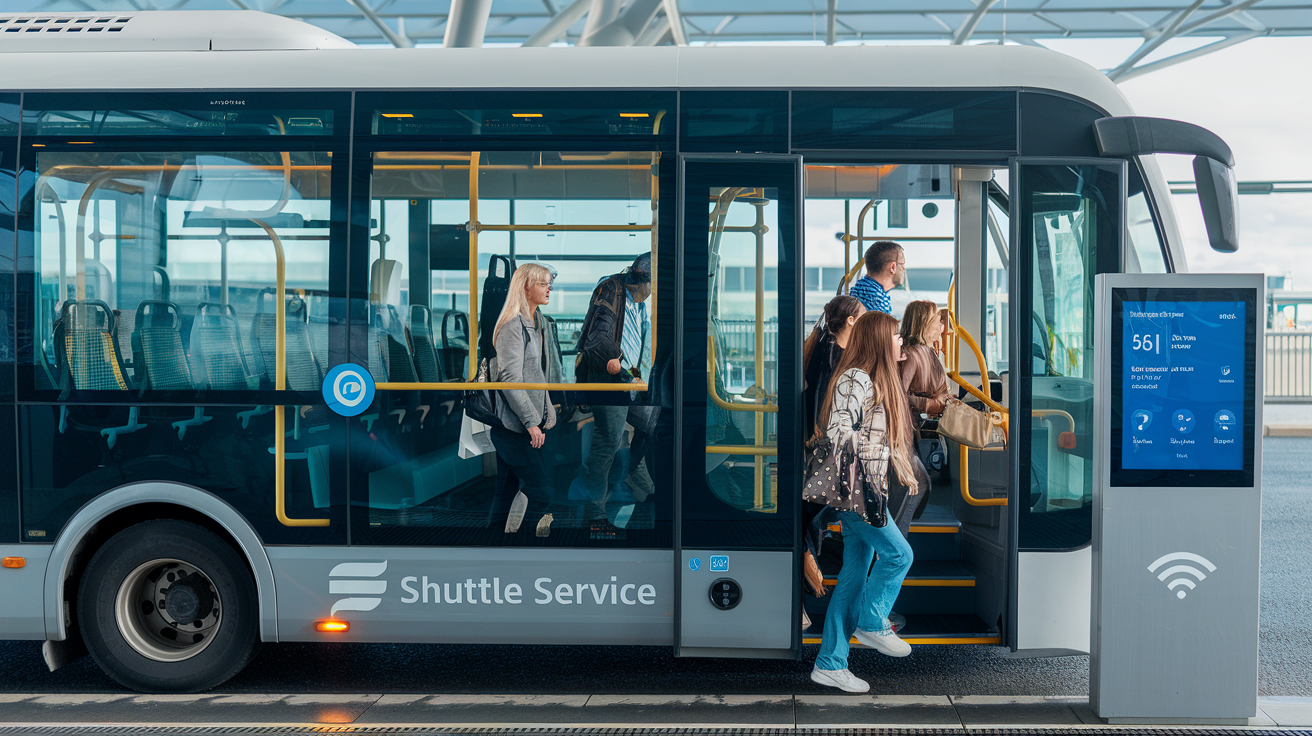
Types of Shuttle Buses
Airport shuttles
Airport shuttles are a vital transportation option for travelers, offering convenient and cost-effective rides to and from airports. These shuttles typically operate on fixed schedules and routes, serving multiple passengers simultaneously.
- Advantages of airport shuttles:
- Cost-effective alternative to taxis or ride-sharing services
- Reduce traffic congestion around airports
- Environmentally friendly due to shared rides
Hotel shuttles
Hotel shuttles provide complimentary transportation for guests between hotels and nearby attractions, airports, or other destinations. These services enhance the guest experience and can be a valuable selling point for hotels.
- Common hotel shuttle destinations:
- Airports
- Shopping centers
- Tourist attractions
- Business districts
Corporate shuttles
Corporate shuttles are provided by companies to transport employees between work locations or from designated pick-up points to the workplace. These shuttles help reduce commute stress and promote employee satisfaction.
| Benefits for Employees | Benefits for Companies |
|---|---|
| Reduced commute costs | Improved productivity |
| Less stress | Enhanced retention |
| Increased punctuality | Reduced parking needs |
Campus shuttles
Campus shuttles serve educational institutions, transporting students, faculty, and staff around large campuses or between multiple campus locations. These shuttles improve accessibility and safety for the campus community.
- Types of campus shuttle services:
- Fixed-route campus circulators
- On-demand shuttles
- Late-night safety shuttles
- Inter-campus connectors
Now that we’ve explored the various types of shuttle buses, let’s examine the benefits of using these services in more detail.
Benefits of Using Shuttle Buses
Cost-effective transportation
Shuttle buses offer a highly cost-effective transportation solution for both passengers and organizations. By consolidating multiple travelers into a single vehicle, shuttle buses significantly reduce per-person transportation costs. This efficiency is particularly evident when compared to individual car usage or ride-sharing services.
| Mode of Transportation | Cost per Person (10-mile trip) |
|---|---|
| Shuttle Bus | $2 – $5 |
| Personal Car | $5 – $10 |
| Ride-sharing Service | $15 – $25 |
Reduced traffic congestion
One of the most significant benefits of shuttle buses is their ability to alleviate traffic congestion in urban areas. By replacing multiple personal vehicles with a single shuttle bus, road congestion is notably reduced. This leads to:
- Shorter travel times for all road users
- Decreased fuel consumption
- Lower stress levels for commuters
Environmental impact
Shuttle buses contribute significantly to environmental conservation efforts:
- Reduced carbon emissions per passenger
- Decreased overall fuel consumption
- Lower noise pollution in urban areas
Convenience for passengers
Shuttle buses offer unparalleled convenience for passengers, particularly in high-traffic areas or for specific routes:
- Regular, reliable schedules
- Designated pick-up and drop-off points
- No need to worry about parking
- Opportunity to relax or work during the commute
Accessibility for all
Shuttle buses play a crucial role in ensuring transportation accessibility for diverse groups:
- Equipped with wheelchair ramps and secure spaces
- Affordable option for those without personal vehicles
- Convenient for elderly passengers and those with mobility challenges
Now that we’ve explored the numerous benefits of shuttle buses, let’s delve into the cutting-edge technology and features that make modern shuttle buses even more efficient and user-friendly.
Shuttle Bus Technology and Features
GPS tracking systems
Modern shuttle buses are equipped with advanced GPS tracking systems, enhancing both efficiency and passenger experience. These systems allow operators to monitor bus locations in real-time, optimize routes, and provide accurate arrival times to passengers. Here’s a breakdown of the benefits:
- Real-time location tracking
- Route optimization
- Accurate arrival time predictions
- Improved fleet management
| Feature | Benefit |
|---|---|
| Real-time tracking | Enhances operational efficiency |
| Route optimization | Reduces fuel consumption and travel time |
| Arrival time predictions | Improves passenger satisfaction |
| Fleet management | Streamlines maintenance and scheduling |
Wi-Fi connectivity
In today’s connected world, shuttle buses are increasingly offering Wi-Fi connectivity to passengers. This feature not only enhances the travel experience but also increases productivity for commuters. Wi-Fi-enabled shuttle buses allow passengers to:
- Work on-the-go
- Stream entertainment
- Stay connected with friends and family
- Access real-time travel information
Eco-friendly fuel options
As environmental concerns grow, shuttle bus operators are adopting eco-friendly fuel options to reduce their carbon footprint. Some popular alternatives include:
- Electric buses
- Hybrid vehicles
- Compressed Natural Gas (CNG)
- Biodiesel
These options not only reduce emissions but also often result in lower operational costs in the long run.
Comfortable seating arrangements
Shuttle buses now prioritize passenger comfort with improved seating arrangements. Features may include:
- Ergonomic seat designs
- Ample legroom
- USB charging ports
- Adjustable headrests
These enhancements ensure a more pleasant journey for passengers, especially during longer trips. With these technological advancements and features, shuttle buses are becoming an increasingly attractive transportation option for various purposes.
Planning and Implementing Shuttle Bus Services
Route optimization
Route optimization is crucial for efficient shuttle bus services. Here are key strategies:
- Data-driven analysis
- Real-time traffic monitoring
- Demand-based routing
- Strategic stop placement
| Optimization Factor | Benefits |
|---|---|
| Data-driven analysis | Improves efficiency and reduces costs |
| Real-time traffic monitoring | Minimizes delays and enhances reliability |
| Demand-based routing | Increases passenger satisfaction |
| Strategic stop placement | Maximizes accessibility and reduces travel time |
Scheduling strategies
Effective scheduling ensures smooth operations and passenger satisfaction. Consider:
- Peak hour frequency adjustments
- Off-peak service optimization
- Special event accommodations
- Seasonal schedule variations
Passenger capacity management
Managing passenger capacity is essential for comfort and efficiency:
- Analyze historical ridership data
- Implement dynamic capacity allocation
- Use real-time occupancy monitoring
- Offer pre-booking options for popular routes
Integration with other transportation modes
Seamless integration enhances the overall transportation ecosystem:
- Coordinate with local public transit
- Implement multi-modal ticketing systems
- Provide bike racks on shuttle buses
- Establish transfer points at key locations
By focusing on these aspects, shuttle bus services can optimize their operations, improve passenger experience, and contribute to a more efficient urban transportation network. As we move forward, it’s crucial to consider the safety measures that ensure the well-being of passengers and drivers alike.
Safety Measures in Shuttle Bus Operations
Driver training and certification
Ensuring the safety of passengers begins with well-trained and certified drivers. Shuttle bus operators must undergo rigorous training programs that cover:
- Defensive driving techniques
- Vehicle handling in various conditions
- Customer service skills
- Emergency response procedures
Certification often includes:
- Commercial Driver’s License (CDL)
- Passenger endorsement
- Clean driving record
- Medical certification
| Training Component | Description |
|---|---|
| Classroom instruction | Traffic laws, safety regulations, company policies |
| Hands-on practice | Vehicle maneuvering, boarding/alighting procedures |
| Simulations | Hazardous weather conditions, emergency scenarios |
| Regular refresher courses | Updates on regulations, new technologies |
Regular vehicle maintenance
Maintaining shuttle buses in top condition is crucial for passenger safety. A comprehensive maintenance schedule typically includes:
- Daily pre-trip inspections
- Weekly mechanical checks
- Monthly comprehensive evaluations
- Quarterly major system overhauls
Emergency protocols
Shuttle bus operators must establish clear emergency protocols to handle various situations:
- Medical emergencies
- Vehicle breakdowns
- Accidents
- Natural disasters
These protocols should be regularly reviewed and practiced through drills and simulations.
Passenger safety features
Modern shuttle buses are equipped with numerous safety features to protect passengers:
- Seatbelts
- Anti-lock braking systems (ABS)
- Electronic stability control
- Fire suppression systems
- CCTV cameras for monitoring
Implementing these safety measures ensures that shuttle bus operations prioritize passenger well-being and maintain high standards of service. With these protocols in place, passengers can enjoy peace of mind during their travels.
Shuttle buses offer a versatile and efficient transportation solution for various settings, from airports and universities to corporate campuses and tourist destinations. With different types available, including airport shuttles, campus shuttles, and corporate shuttles, these vehicles cater to diverse needs while providing numerous benefits such as reduced traffic congestion, lower environmental impact, and cost savings for both operators and passengers.
As technology advances, shuttle buses are incorporating innovative features like real-time tracking, electric and hybrid powertrains, and accessibility options for passengers with disabilities. To maximize the effectiveness of shuttle bus services, careful planning and implementation are crucial, along with stringent safety measures to ensure the well-being of passengers and drivers alike. By embracing shuttle bus services, communities and organizations can create more sustainable, convenient, and connected transportation networks that benefit everyone involved.
