Walk into Han Market at eight in the morning and the first thing that hits you is the smell — dried squid, roasted coffee and fish sauce, all at once. Stallholders are stacking pyramids of dried mango, a tailor upstairs is already measuring a customer for an ao dai, and the food court is serving banh beo to locals perched on tiny plastic stools. This Han Market Da Nang guide walks you through both floors: what to eat first, what is actually worth buying, when to come, and how to bargain without feeling awkward.
Han Market at a Glance
- Address: 119 Tran Phu Street, Hai Chau District — one block from the Han River, about 190 m from Da Nang Cathedral (the Pink Church) and 700 m from Dragon Bridge.
- Opening hours: Daily, roughly 6:00 AM – 7:00 PM. Stalls keep their own hours: food stalls start early and many wind down around midday.
- Layout: Two floors — food, dried goods and fresh produce downstairs; clothing, fabric and tailors upstairs.
- Time needed: 1–2 hours, longer if you order tailored clothes and come back for a fitting.
- Entry: Free — it is a working market, not an attraction with tickets.
If you only have time for one market in Da Nang, make it this one. It is the city’s oldest and most central market, a short walk from the riverfront.
A Short History of Han Market
Han Market — Cho Han in Vietnamese — takes its name from the Han River flowing past it. A market has stood on this spot since the 1940s, in the French colonial period, when Da Nang was growing into one of Central Vietnam’s most important trading ports. The market was rebuilt in 1989 as the two-storey hall you see today.
It is still where Da Nang families shop for Tet ingredients, wedding fabric and everyday groceries. Tourists are welcome, but the market works for locals first — and that is what makes a morning here so much fun.
The Ground Floor: Where Da Nang Comes to Shop
The ground floor is a feast for the senses. Near the entrances, dried goods are piled into colourful pyramids: dried squid and shrimp, mango and jackfruit, salted cashews, and bags of coffee beans that stallholders will grind fresh for you. A whole corner is devoted to fish sauce and mam — the fermented pastes that give Central Vietnamese cooking its depth — and the air down those aisles is gloriously pungent.
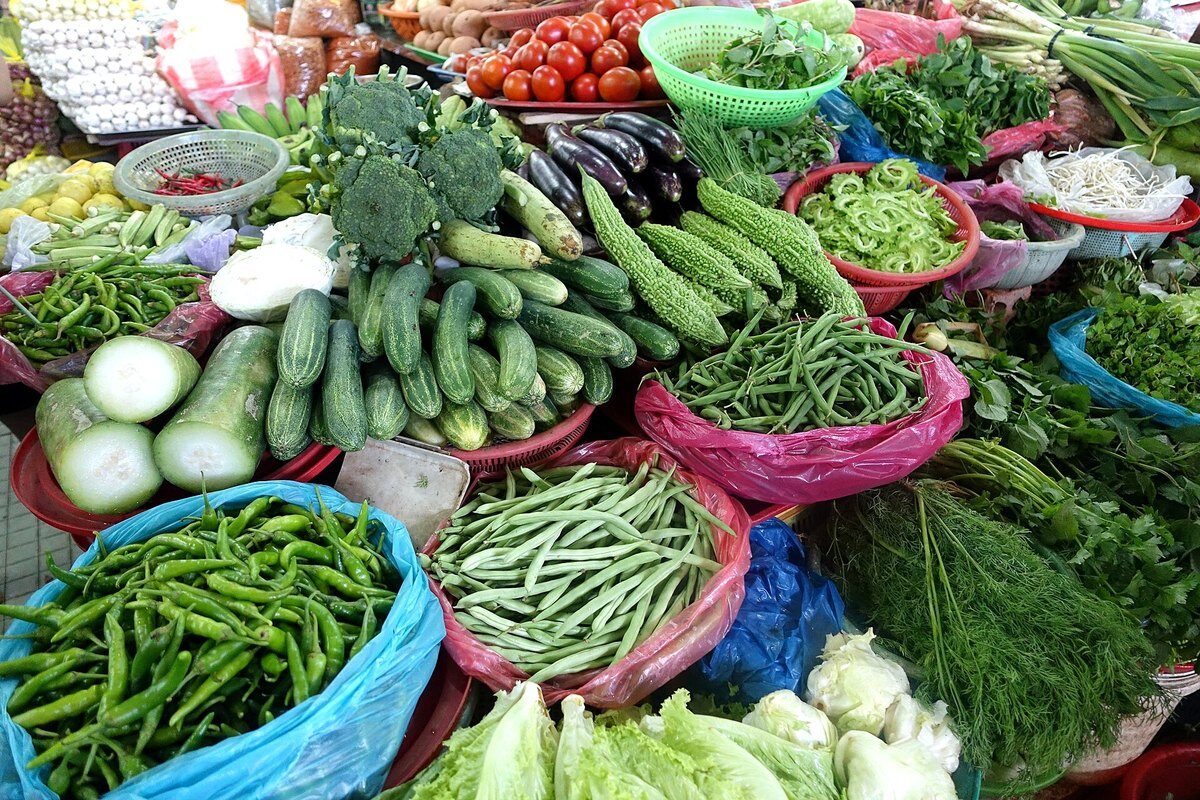
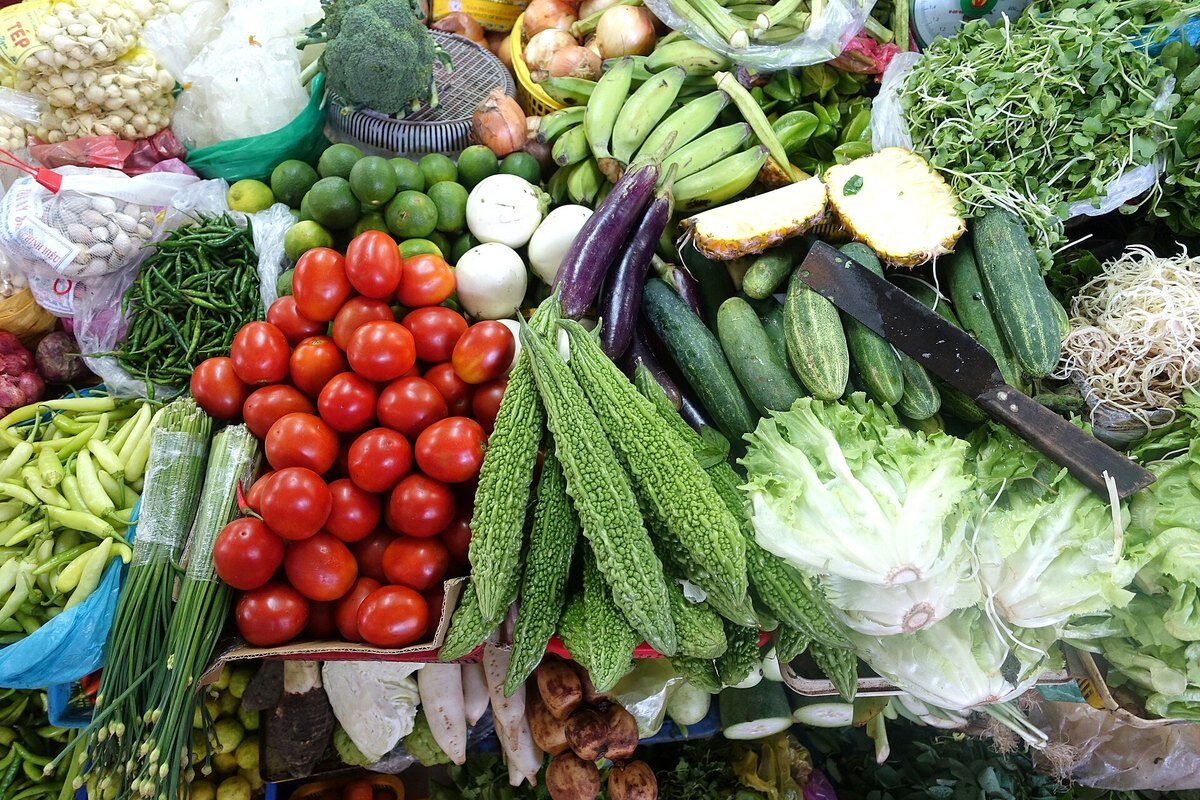
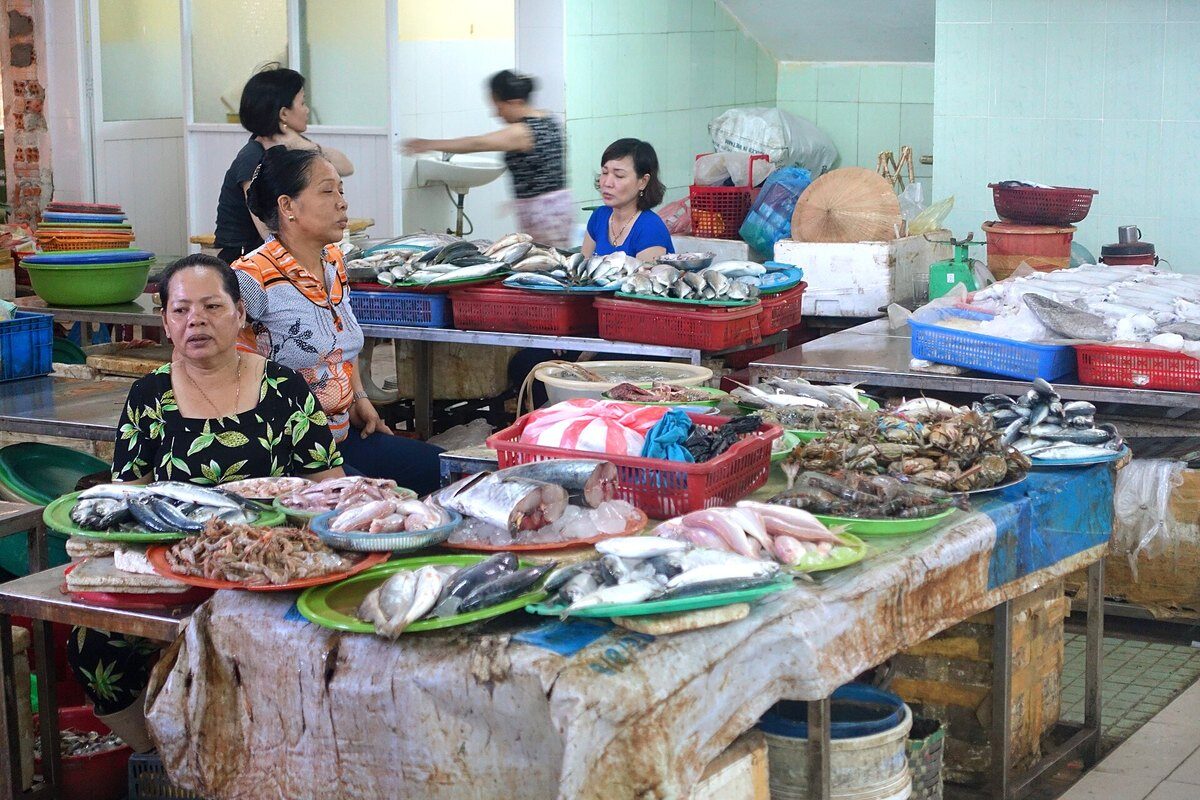
Deeper in, the fresh sections take over: vegetables and herbs still wet from the morning’s delivery, and a seafood corner where the day’s catch — fish, squid, prawns and crabs — sits on trays of crushed ice. This is the raw material of the food court next door — the real reason food lovers come here.
What to Eat at Han Market
The ground-floor food court is small, busy and excellent value. Ordering is easy even without Vietnamese: point at what the person next to you is eating, hold up fingers for how many, and sit down. Start with these:
- Banh beo — little steamed rice cakes in individual dishes, topped with dried shrimp, scallion oil and pork cracklings. A portion of eight to ten dishes costs around 20,000–30,000 VND and is the classic market breakfast.
- Mi Quang — Da Nang’s signature turmeric noodles with prawn, pork, herbs and a crunchy rice cracker, around 30,000–50,000 VND a bowl.
- Banh canh — thick, chewy noodles in a rich crab, fish or pork broth, around 25,000–40,000 VND.
- Banh xeo — small, crisp turmeric pancakes folded around prawn and bean sprouts, eaten with herbs and peanut sauce, around 25,000–40,000 VND a serving.
- Something sweet — finish at a che stall for a glass of sweet dessert soup, or order a creamy avocado smoothie (sinh to bo) to carry upstairs.
One warning: the food stalls are a morning affair. They open with the market and many sell out or close by 11:00 AM to midday, so plan to eat first and shop afterwards. If you would rather have a local decode the menus for you, a Da Nang walking food tour with a local guide turns market grazing into a full street-food education — and there is no need to guess what anything is.
Upstairs: Fabric, Tailors and an Ao Dai in a Day
Take the stairs and the market changes completely. The second floor is given over to clothing, shoes, bags and — most famously — fabric. Hundreds of stalls sell silk, cotton and brocade by the metre, and the tailors here are known for their speed: choose your fabric, get measured, and a made-to-measure ao dai can be ready in as little as one to three hours. Expect to pay roughly 400,000–1,000,000 VND for a set, depending on the fabric you choose.
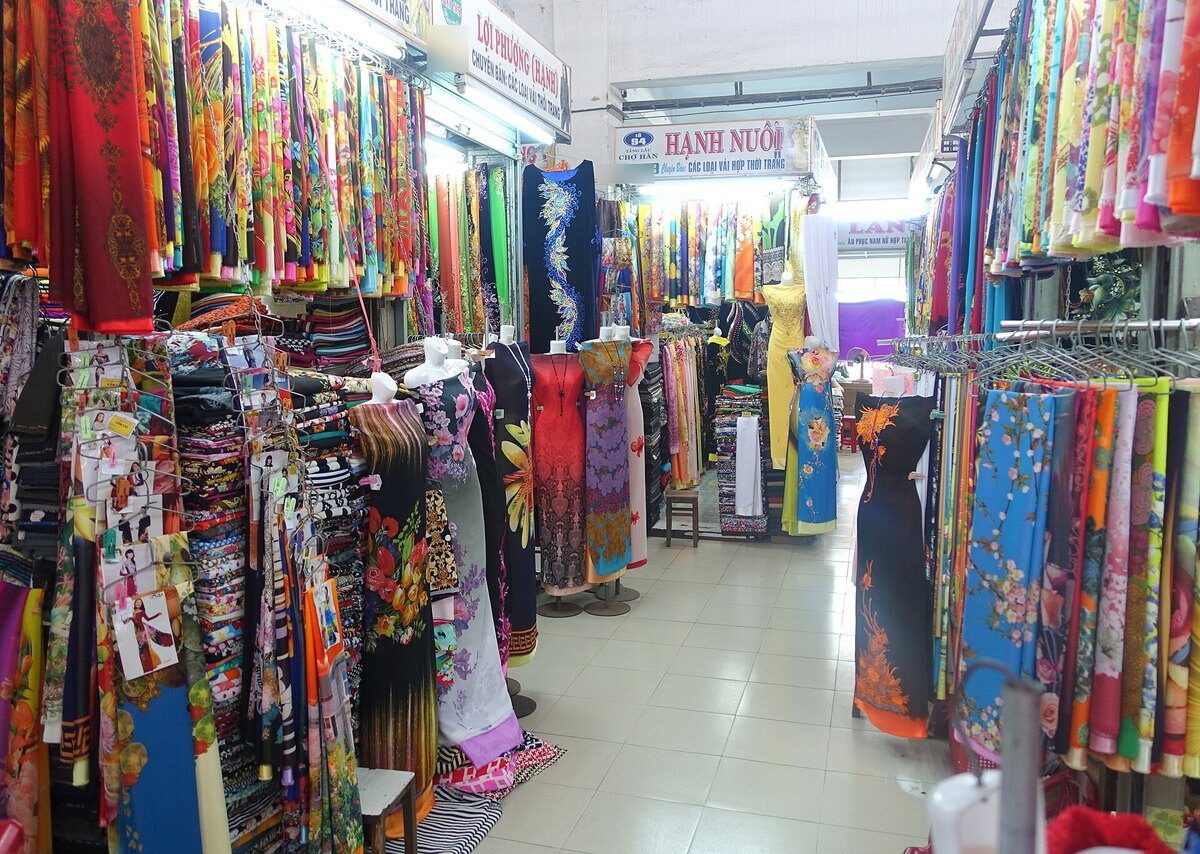
Two tips if you order clothes. Come early in your trip, not on your last afternoon, so there is time for adjustments. Agree on the total price and pickup time before any cutting starts — a photo of the style you want helps more than any description.
What to Buy — and What to Skip
Han Market’s great strength is edible souvenirs. The buys that travel well and taste like Da Nang:
- Dried seafood — squid, shrimp and fish snacks; most stalls vacuum-pack them for your suitcase.
- Ly Son garlic — the famous small, intensely flavoured garlic from Ly Son Island.
- Fish sauce and mam nem — buy sealed bottles and pack them inside a sealed bag in checked luggage.
- Coffee — robusta beans or blends, ground to order while you watch.
- Dried fruit, cashews and coconut candy (keo dua) — light, cheap and easy to share back home.
- Rice paper and sesame crackers — plus conical hats and lacquerware for something you can keep.
Skip the knock-off branded goods and the heavy ceramics — spend your money where the market is genuinely good: food.
How to Bargain at Han Market
Bargaining is expected at the clothing and souvenir stalls, and much less at the food court, where prices are low and often fixed. Smile and treat it as a conversation rather than a contest. Offering a price clearly below the asking price and meeting in the middle is normal; buying several items from one stall usually earns a better deal. Carry small notes, and if a price still feels wrong, a polite “no, thank you” and a slow walk away works fine — remember the difference you are arguing over is often the price of a coffee, while it is real income for the stallholder.
Best Time to Visit and Getting There
For food, come between 7:00 and 10:00 AM, when the food court is at its freshest and the market is at its liveliest. Tailors work best between 9:00 AM and 5:00 PM. By 6:00 PM stallholders are packing up, so evenings disappoint. The market is an easy walk from Dragon Bridge and the Pink Church, and a short Grab or taxi ride from the beachfront hotels. Pair it with a stroll along the Bach Dang riverfront promenade, right outside the door.
See Han Market With a Local
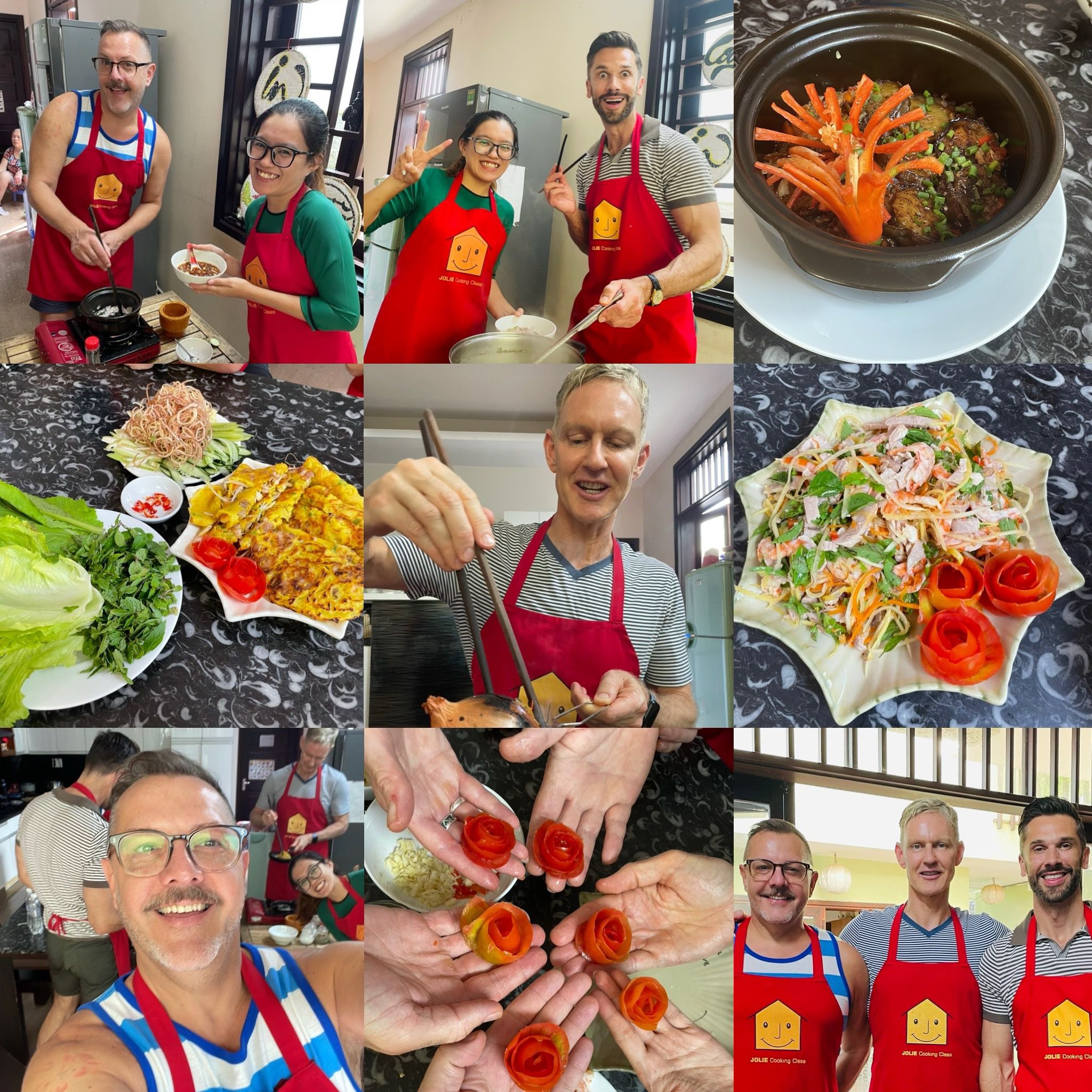
A market like this rewards local knowledge — which stall’s mam nem is the good one, which tailor to trust, which banh beo lady has been there for thirty years. Jolie is a small family-run team in Da Nang and Hoi An, and our Da Nang cooking class begins the way Da Nang cooks begin: at the market, basket in hand, choosing the morning’s ingredients before heading back to the kitchen to cook them.
Tell us when you are in town — whether you book a class or simply want a steer, we are always happy to point you towards our favourite stalls. You can reach us on WhatsApp at +84 399 67 68 52.
Frequently Asked Questions About Han Market
What are Han Market’s opening hours?
The market opens daily at roughly 6:00 AM and closes around 7:00 PM. Food stalls start with the market and many finish by midday; clothing and tailor stalls are busiest from about 9:00 AM to 5:00 PM.
How long should I spend at Han Market?
One to two hours is enough to eat breakfast, walk both floors and shop for souvenirs. Add time if you order tailored clothes — you will return later the same day for pickup.
Is Han Market good for souvenirs?
Yes — it is one of the best places in Da Nang for edible souvenirs such as dried seafood, coffee, Ly Son garlic, dried fruit and coconut candy, most of it vacuum-packed for travel. Upstairs covers clothing, fabric and handicrafts.
Can I bargain at Han Market?
Yes, at clothing and souvenir stalls — politely, and with a smile. Prices at the food stalls are low and usually fixed, so enjoy those as they are.
What food should I try first at Han Market?
Banh beo for a true local breakfast, then a bowl of Mi Quang, the noodle dish Da Nang is famous for. Arrive before 10:00 AM, because the best stalls sell out.
Is Han Market near Dragon Bridge?
Yes — about 700 metres away, an easy ten-minute walk along the riverfront. Da Nang Cathedral, the Pink Church, is even closer, around 190 metres from the market.
A Market Worth Waking Up For
Han Market is not a polished attraction, and that is precisely its charm: it is Da Nang’s kitchen, wardrobe and pantry rolled into one noisy, colourful hall. Use this Han Market Da Nang guide to explore it with confidence — eat early, bargain kindly, leave room in your suitcase — and if you would like a local beside you, take a look at our Da Nang tours and come hungry.